
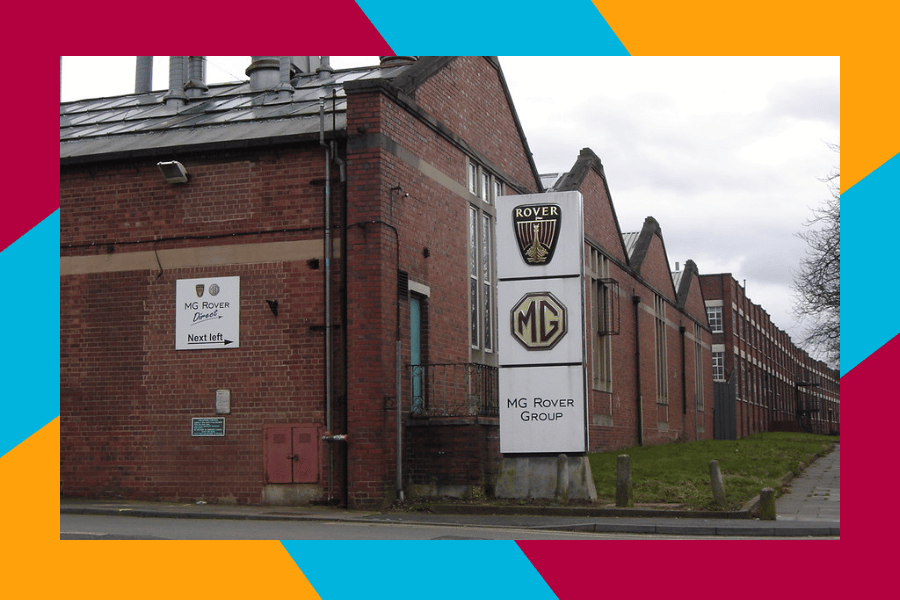
Longbridge: Former MG Rover works. Image by harry_nlCC on Flickr (BY-NC-SA 2.0)
In this LPIP Hub report, Ed Atkins examines how the experiences of workers following the closure of MG Rover in Longbridge, Birmingham, offer lessons for green industrial policy today. He shows how proactive, place-based and skills-centred interventions helped mitigate the regional economic impacts of closure but also highlighted unequal economic outcomes for workers. Ultimately, he argues that future place-based green industrial policy must seek to both diversify regional economies and ensure robust, long-term skills pipelines to ensure workers aren’t left behind as high-emissions industries decline and others emerge.
“While many found new work in nearby manufacturing sectors, others were left behind by the transition. At Longbridge, many workers found themselves in lower‑paid and insecure jobs because of a lack of clear pipelines into new manufacturing work.”
Dr Ed Atkins
The case of MG Rover shows that skills programmes must be directly tied to long-term industrial demand, not standalone training programmes. Structured pathways can give workers a clear route into new green sectors, supporting their retraining and allowing them to access secure work.
Meet the Author
Ed Atkins researches the contested character of environmental and energy policy and politics. This is with a particular focus on the local politics of energy generation and consumption, decarbonisation and climate action. He also traces how energy transitions will restructure regional economies and patterns of employment.
He is an Associate Professor at the School of Geographical Sciences, University of Bristol.